
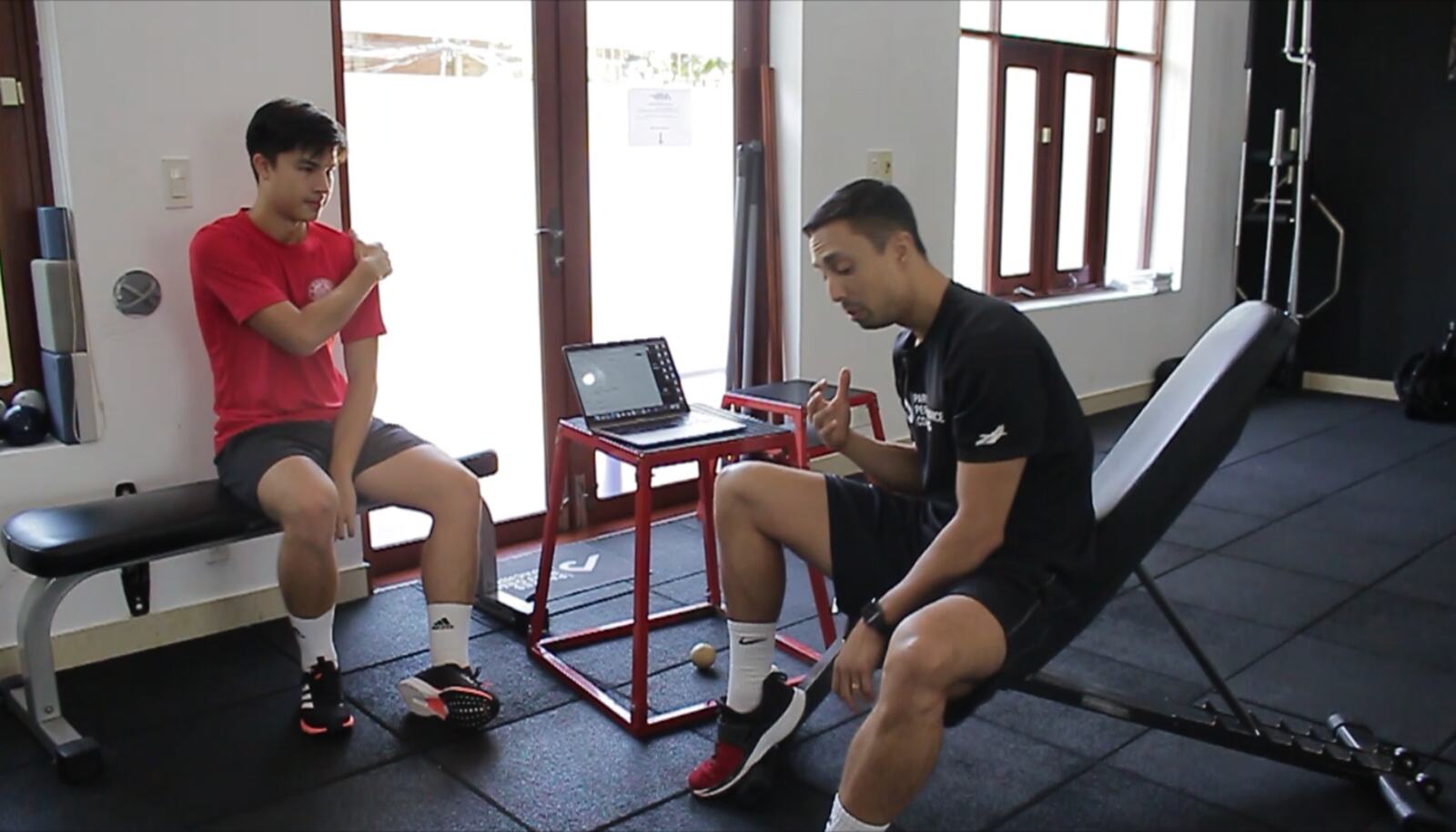
Most people start training by guessing. They pick weights that feel about right, copy a program that worked for someone else and hope it fits. Sometimes it does. Often it is too easy, too hard, or quietly aggravating an old injury.
A performance assessment replaces that guess with a starting point. At Parkes Performance Coaching every program begins with one, right after the intake. Here is what it looks at, and why each part matters.
It starts before you arrive
The assessment builds on your intake. Before your first session, your coach has read about your goals, your sport or activity, any injuries or surgery, how well you sleep and the days you can train. That shapes what the assessment focuses on. A footballer coming back from a hamstring strain and a parent who wants to carry their kids without back pain need different things checked.
What gets measured
The exact tests depend on you, but a performance assessment usually covers five areas.
Movement quality
How you squat, hinge, lunge, push and reach overhead. Your coach is looking at control and positions. Does a knee cave in? Does the lower back round? Does one side move differently from the other? These patterns show up in almost every exercise you will do, so they are worth seeing first.
Mobility
How far your key joints move, especially the ankles, hips, upper back and shoulders. Limited mobility is not a problem in itself, but it changes which exercises suit you today and what to work on alongside them.
Strength
A sense of what you can lift with good technique. This does not mean testing your maximum on day one. A controlled set at a moderate weight tells your coach enough to set your starting loads.
Power and speed
For athletes and anyone with a sport in mind, how explosively you move. Jumps, short sprints or throws, chosen to fit your sport and your history. If you are coming back from an injury, these wait until you are ready for them.
Conditioning
How well you recover between efforts. A simple, repeatable test gives your coach a reference to compare against later, without you needing to empty the tank.
Pain and history
Alongside the tests, your coach asks where things hurt, what makes it better or worse, and what you have tried before. A performance assessment is not a medical diagnosis. If something needs a physio or doctor, your coach will say so and plan around their advice.
Why it matters
It sets sensible starting points. Loads, volume and exercise choices start from what you can do today, not from a guess.
It finds what is holding you back. A stiff ankle, a weaker side or poor control in one position can limit everything else. Working on that first means the rest of the plan builds on solid ground.
It decides the focus. Two people with the same goal can need very different plans. The assessment is how your coach chooses where your training time goes.
It makes progress measurable. At PPC we re-test every few weeks. Because you have a baseline, you can see what has improved and what needs more work, instead of relying on how a session felt.
What to expect on the day
Wear clothes you can move in and the shoes you train in, and bring water. If you have notes from a physio or doctor about an injury, bring them along or mention them in your intake. Expect to move a lot and talk a little. Ask your coach what each test is for: knowing why makes it easier to buy into the plan that follows.
The assessment is the first step of a structured plan. To see what comes next, read why a structured strength plan beats random workouts. If you are coming back from an injury, our guide to returning to training after an ankle sprain shows how the same step-by-step approach works in rehab.
Ready to find your starting point? Start your intake, or book a one-off consultation if you want a single session to look at how you move.
FAQ
What is a performance assessment?
A set of simple tests and questions that show how you move, how strong and fit you are today, and what has held you back before. Your coach uses it to set starting loads, choose exercises and measure progress over time.
Do I need to be fit before a performance assessment?
No. The assessment is there to find your starting point, wherever that is. The tests are chosen to suit you, and anything that is not right for you today is left out.
Will I have to max out on lifts during the assessment?
No. Your coach can learn what they need from controlled sets at moderate weights. You do not need to test a true maximum to start a good plan.
How often should I be re-tested?
Every few weeks is a good rhythm: long enough for training to make a difference, and short enough to change course if something is not working. At PPC, re-testing every few weeks is part of the plan.